
Glass shower doors are beautiful for about a week. Then the cloudy film shows up — that chalky, foggy haze that no amount of regular glass cleaner seems to touch. If you're in Chicago or the surrounding suburbs, you're fighting a losing battle against some genuinely hard water, and those hard water stains on shower glass are the mineral proof of it.
Here's the reassuring part: in almost every case, that "permanent" cloudiness isn't permanent at all. It's mineral scale sitting on top of the glass, and with the right approach it dissolves right off. Let me show you how we tackle it, and just as importantly, how to keep it from coming back.
Hard water is water with a high concentration of dissolved minerals, mainly calcium and magnesium. Chicago's water is on the hard side, and when it splashes onto your shower glass and evaporates, the water leaves but the minerals stay behind, building up layer by layer into a rough, cloudy scale. Soap scum bonds with those minerals too, which is why the film feels slightly gritty and gets worse over time. If you want the full picture on why this happens here, our explainer on whether Chicago has hard water is worth a read — it affects far more than just your shower.
Because the stain is a mineral deposit, the fix is chemistry, not muscle. A mild acid dissolves the scale so you're not stuck scrubbing forever.
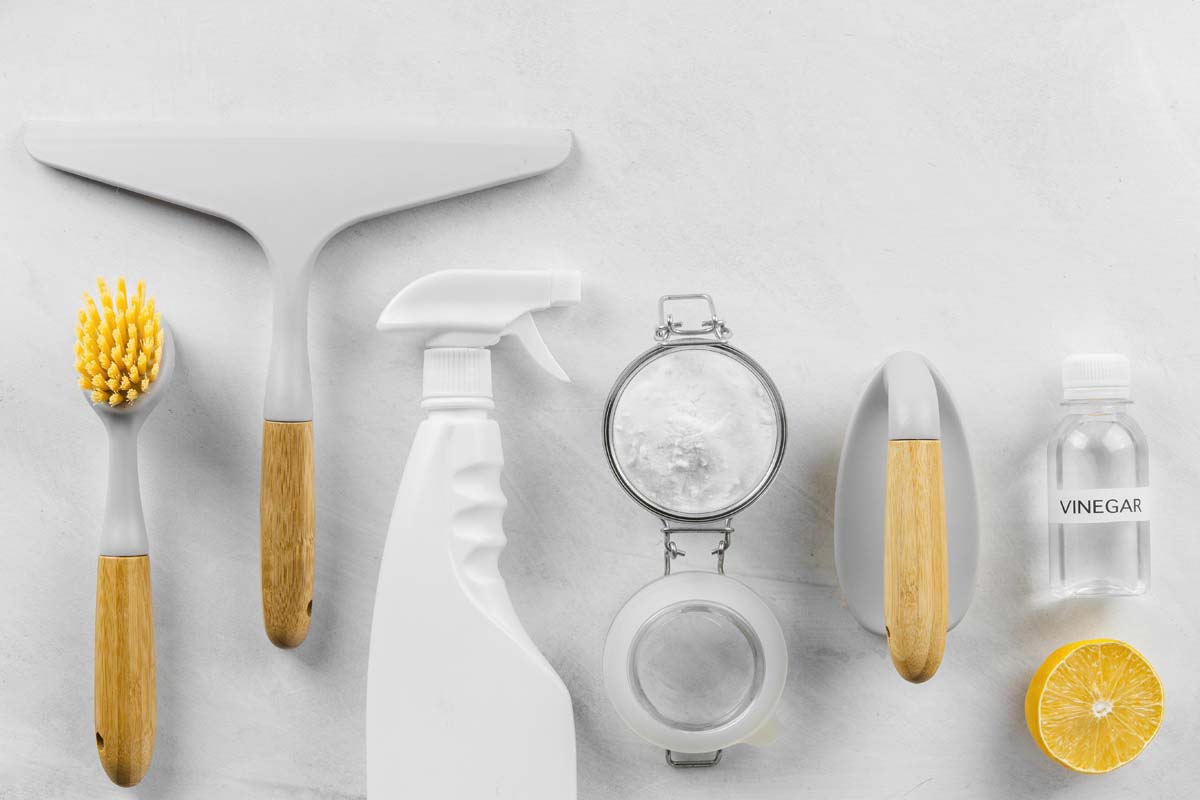
Combine equal parts white vinegar and water in a spray bottle — a simple 1:1 mix. Warming the solution slightly makes it work faster, because warm acid dissolves mineral scale more effectively than cold. You can warm the water before mixing, or briefly warm the diluted solution. For heavy, years-old buildup, a dedicated lime and scale remover will be stronger than vinegar; follow its label directions.
Spray the solution generously over the stained glass and let it dwell for 5 to 15 minutes. This dwell time is the part people skip, and it's the part that matters most. The acid needs those minutes in contact with the scale to break it down. Don't let it dry out — if it starts drying, mist it again to keep the glass wet the whole time. On vertical glass, laying vinegar-soaked paper towels against the worst spots helps the solution cling instead of running straight to the floor.
Once the scale has softened, scrub the glass with a non-scratch pad or soft nylon brush, working in circular motions. You should feel the grit lifting away. Re-spray as needed to keep things wet while you work. Never use steel wool or an abrasive scouring pad on glass — it will leave fine permanent scratches that trap even more grime and haze the glass for good. Stick to pads labeled non-scratch or safe for glass.
For thick deposits that vinegar alone won't budge, make a paste of baking soda and a little water, apply it over the stubborn areas, and scrub. The baking soda provides gentle, non-scratching abrasion that works with the vinegar's chemistry to lift the toughest scale. It'll fizz a bit where the two meet — that's fine and even helpful.
Rinse all the vinegar and residue off with clean water. Don't leave acidic solution sitting on the glass or fixtures longer than needed.
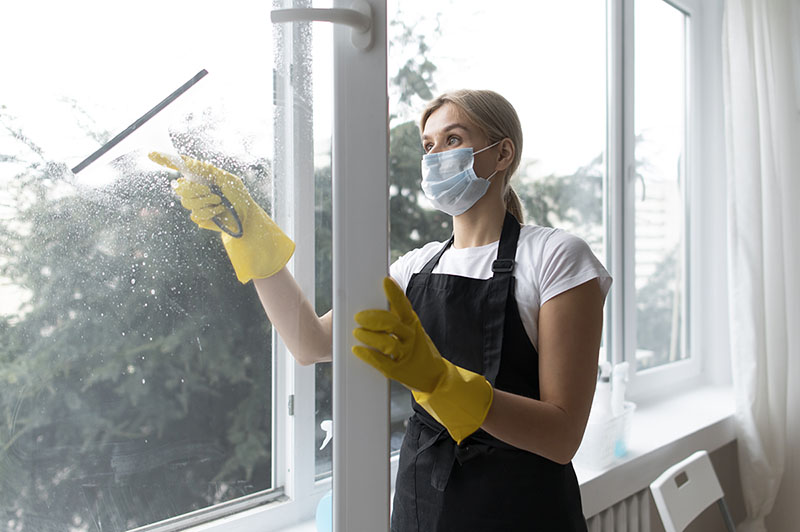
Finish by running a squeegee down the glass, then buff any remaining spots with a dry microfiber cloth. A properly squeegeed door dries clear and streak-free — and this final step is also your first line of prevention going forward.
Vinegar is gentle as household chemicals go, but it's still a mild acid, and there are a few places it can do real harm. Keep these in mind
Ventilate the bathroom while you work, and wear gloves if your skin is sensitive to vinegar.
Once your glass is clear, a few small habits keep it that way so you never have to do the deep scrub again
Do those and the whole problem largely disappears. Prevention is a couple of minutes a week; remediation is an afternoon.
One more prevention tip that homeowners rarely consider: if hard water is a chronic problem across your whole house — spotty dishes, crusty faucets, dull laundry, and shower glass that clouds within days — a whole-home water softener addresses the root cause rather than the symptom. That's a bigger investment and a decision for another day, but it's worth knowing that the same minerals fogging your shower are also shortening the life of your water heater and appliances. Until then, the squeegee and a good sealant are your best everyday defense, and they cost almost nothing.
Here's an honest caveat. In the vast majority of cases, cloudy shower glass is surface scale that comes right off with the method above. But if hard water has been left to sit on glass for years — especially untreated glass in an older Chicago home — the minerals can very slowly begin to etch the glass surface itself. Etching is physical damage to the glass, not a deposit sitting on top, and no cleaner will fully remove it. The way to tell the difference: after a proper vinegar soak and scrub, run your fingernail over the glass. If it's smooth and clear, you got the scale off. If you still feel roughness or see permanent cloudiness that won't shift no matter how long you soak, that's etching, and at that point a professional glass-polishing compound (cerium oxide) or, in severe cases, replacement is the only real fix. The good news is that etching is rare and entirely preventable with the squeegee-and-seal habits below — which is exactly why prevention beats cure here.
Chicago winters mean windows stay shut and bathrooms stay humid for months, which compounds both mineral buildup and mildew. Running the bathroom exhaust fan during and for a good 15 to 20 minutes after every shower makes a real difference, both for keeping the glass clearer and for discouraging mold in the grout and corners. It's a small habit that pays off across the whole room, not just the shower door.
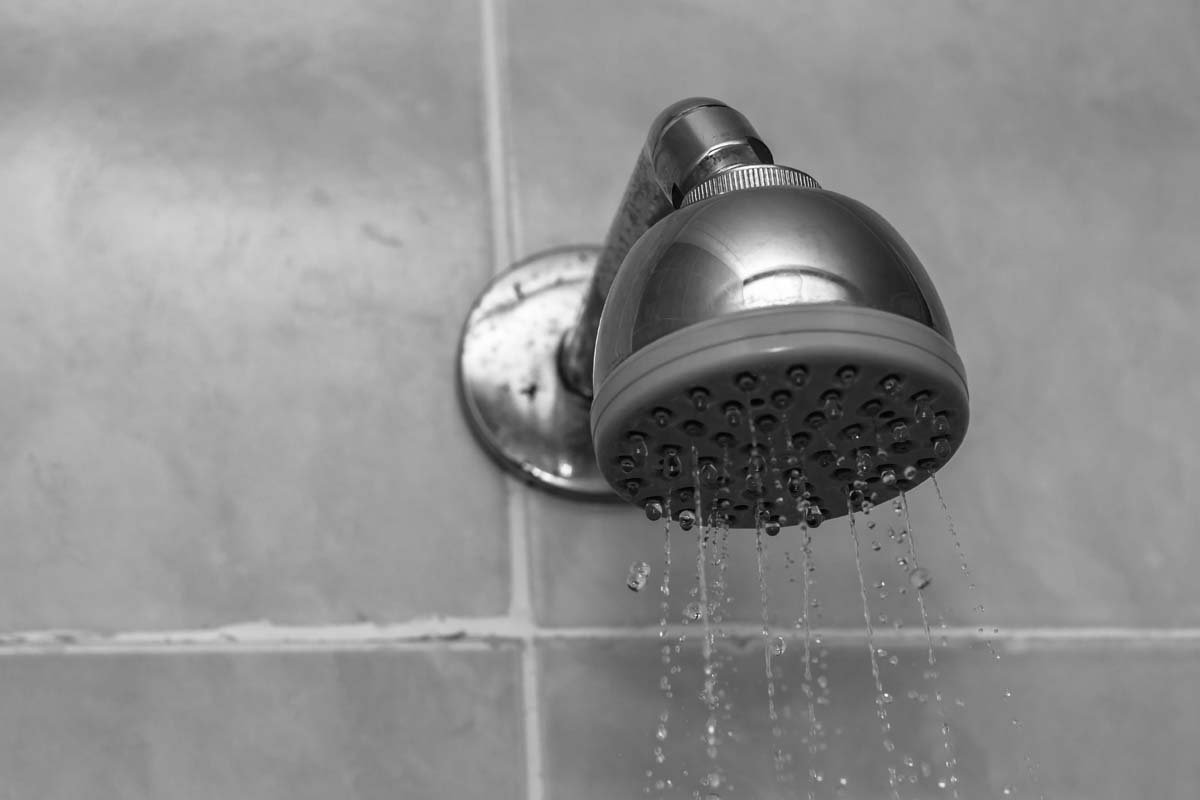
Hard water doesn't just cloud the glass — it clogs everything it touches. If your water pressure has dropped, mineral scale in the shower head is usually the culprit, and our guide to cleaning a shower head and restoring water flow uses the same vinegar-soak principle. The grout and tile take a beating from hard water and soap scum too; cleaning grout to make tile look brand new rounds out a full shower refresh. And because bathrooms are humid by nature, keeping an eye on moisture matters for your health — our piece on mold and your health explains why ventilation is more than a cosmetic concern.
Fighting Chicago's hard water is a never-ending job, and scrubbing shower glass is nobody's idea of a good weekend. Spotless Home Cleaners has served Chicago and 70+ surrounding suburbs for 11 years with a background-checked crew, eco-friendly products, transparent pricing, and a 100% satisfaction guarantee. Our crews know exactly how to cut through mineral scale and soap scum without harming your fixtures, and our 75-point inspection means the glass, grout, and fixtures all get the attention they need. Call us now and book your cleaning today, or ask about a full deep cleaning to get every surface in your bathroom gleaming again. After 11 years and more than 9,000 homes, we know Chicago's water — and how to beat it.



















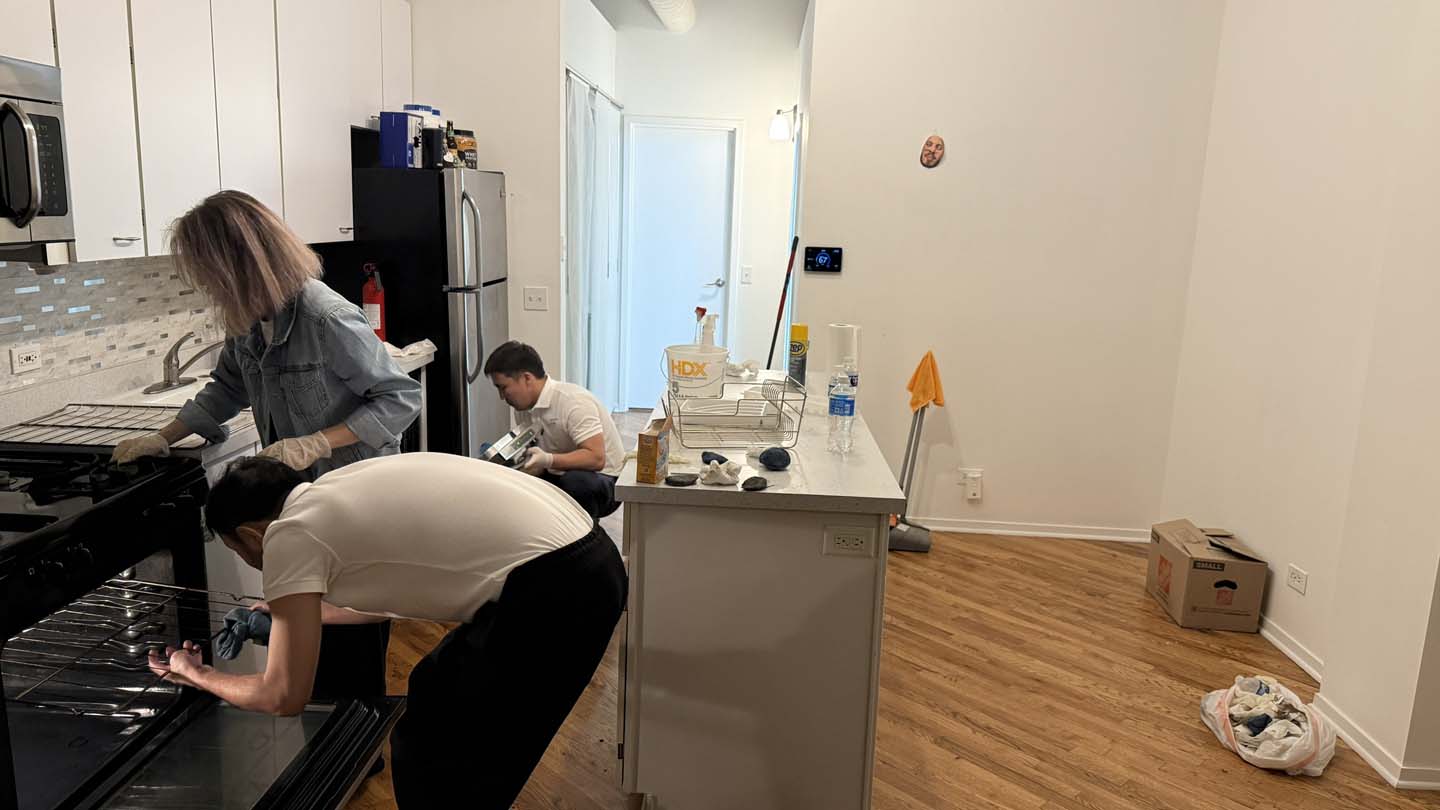


Keep your space fresh, clean, and stress-free with our full range of residential cleaning services in Chicago, IL. Whether you need routine maintenance, a deep clean, or move-in/move-out service, our expert team delivers spotless results every time.