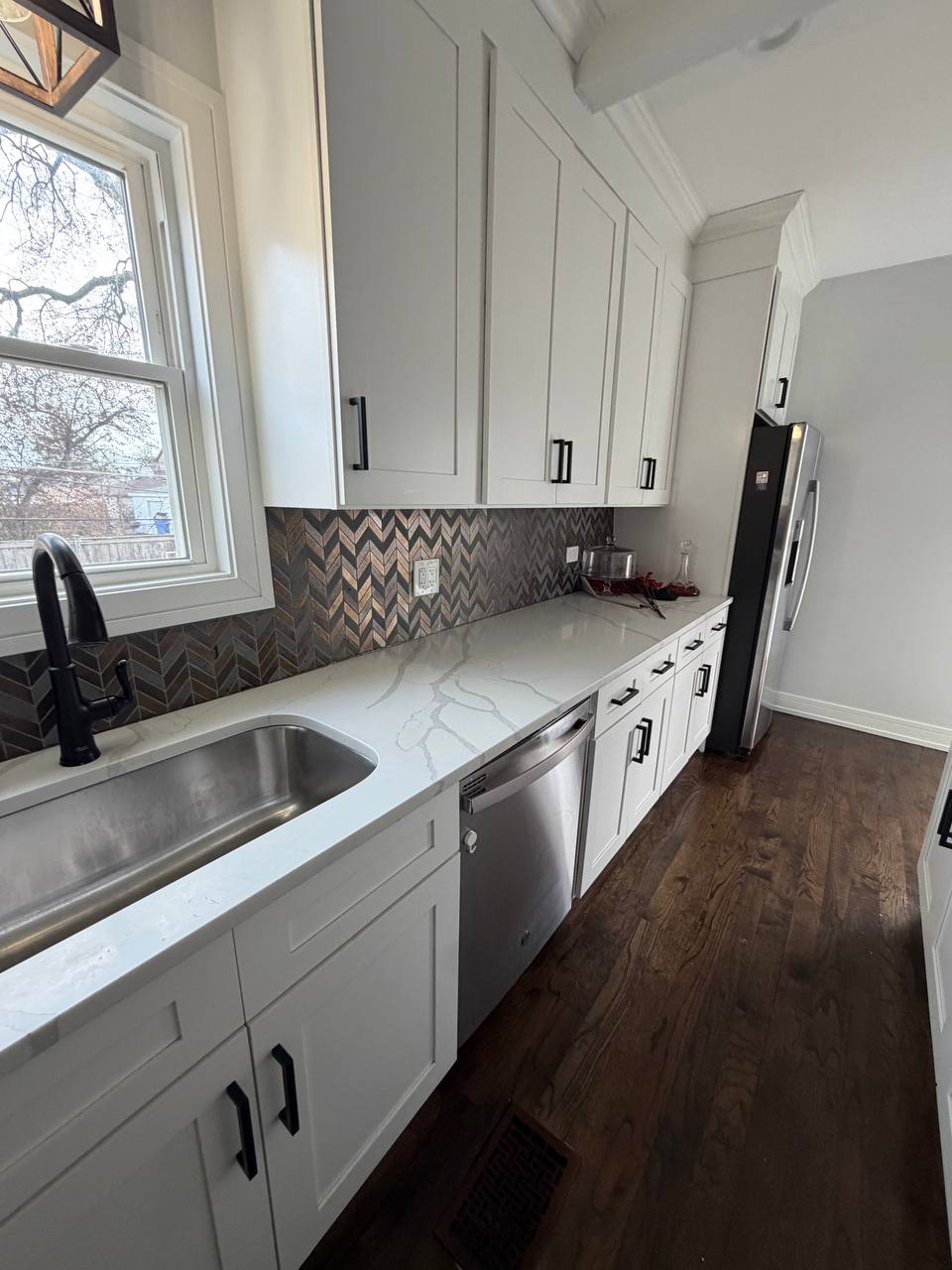
If you live anywhere in the Chicago area and you've ever wondered why your glass shower door goes cloudy days after you squeegee it, or why your chrome faucet keeps growing a chalky white crust, you're not imagining things. Chicago has hard water. In the thousands of homes we've cleaned across the city and the suburbs over the past 11 years, hard-water buildup is one of the single most common complaints we hear — and one of the most misunderstood.
So let's answer the question plainly: is Chicago water hard? Yes. It comes straight out of Lake Michigan, and while that lake water is genuinely good, clean drinking water, it carries dissolved minerals that leave their mark all over your home. Here's what's actually going on, what those minerals do to your fixtures, and exactly how to keep the buildup under control without wrecking your finishes.
Chicago draws its tap water from Lake Michigan, and according to the City of Chicago, that water measures roughly 7 to 9 grains per gallon — about 130 to 150 parts per million. On the standard water-hardness scale, that lands Chicago squarely in the "moderately hard to hard" range.
Grains per gallon is just the way water utilities measure the concentration of dissolved minerals — mainly calcium and magnesium — in your supply. The higher the number, the more mineral content, and the more visible residue those minerals leave behind as water evaporates off your surfaces. At 7 to 9 grains, Chicago isn't the hardest water in the country, but it's hard enough that you'll see the effects everywhere water sits, sprays, or dries.
This is true whether you're in a Lincoln Park high-rise, a Bungalow Belt two-flat, or a newer build out in Naperville or Schaumburg. If your water comes from the lake — and most of the metro area's does — you're dealing with the same mineral load.
It's worth clearing up a common worry: hard water is a nuisance, not a health hazard. The calcium and magnesium that make Chicago's water hard are the same minerals your body needs, and the City treats and monitors that lake water to be safe to drink. So this is purely a cleaning and maintenance story — your fixtures suffer, not your family. That's actually good news, because it means the whole problem is one you can solve at the surface, with the right habits and the right products, rather than something you need to worry about beyond the aesthetics and upkeep.
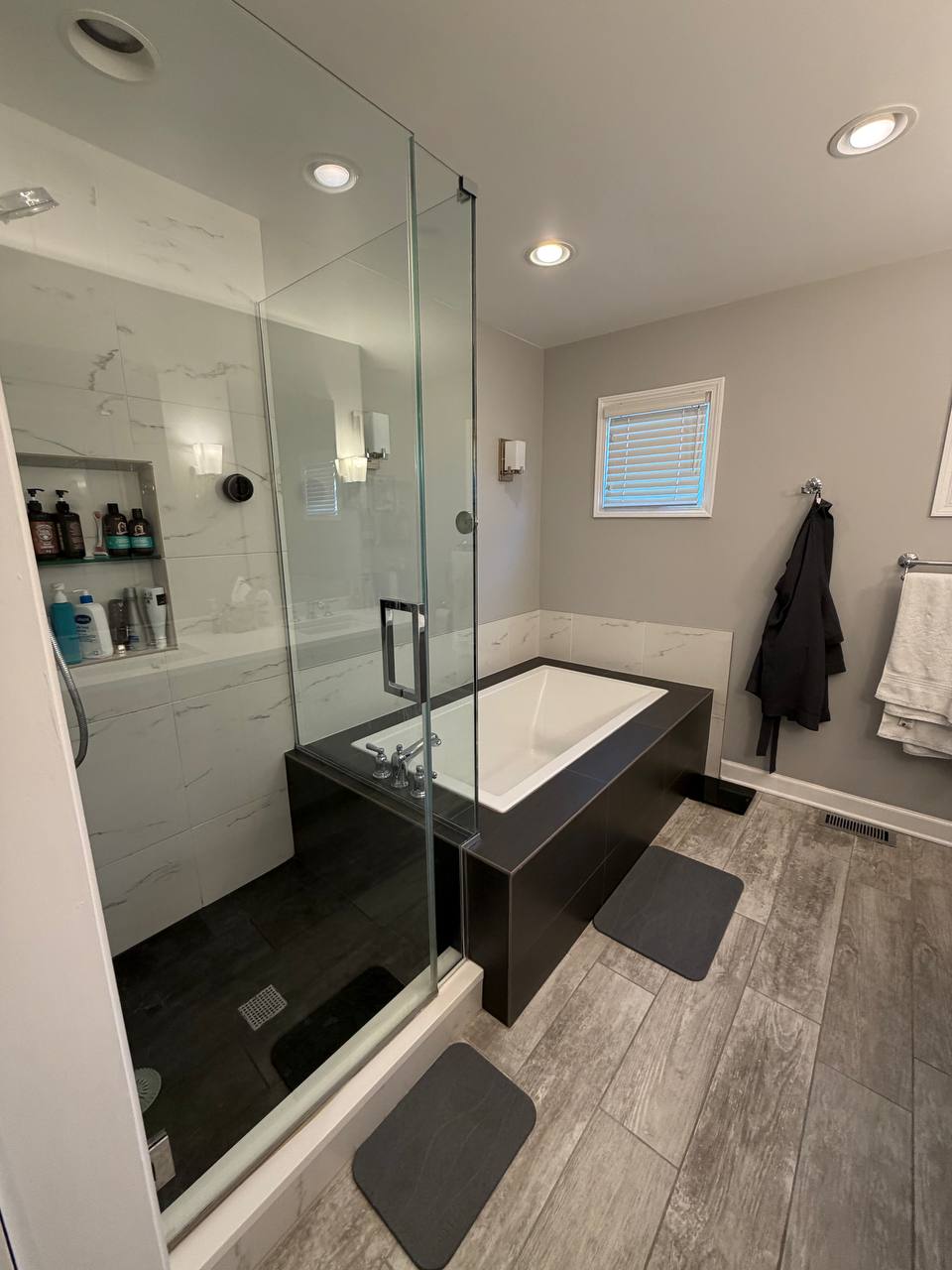
Calcium and magnesium don't rinse away like ordinary dirt. When hard water dries on a surface, the water evaporates but the minerals stay put, hardening into what's called limescale — that stubborn, chalky, off-white deposit. Over time it builds layer on layer. Here's where it shows up first in a typical Chicago home:
None of this means anything is wrong with your water or your plumbing. It's simply the natural consequence of moderately hard lake water meeting the surfaces in your home day after day.
Hard water works quietly on the things you don't see, too. It leaves scale inside kettles, coffee makers, and humidifiers; it can shorten the life of a water heater as sediment settles at the bottom of the tank; and it makes your laundry detergent and dish soap work harder, because the minerals bind up some of the soap before it can do its job. That's part of why Chicago households often feel like they need more detergent, more rinse aid, and more elbow grease than they'd expect. It isn't you — it's the water.
You can't change the water coming out of the tap short of installing a whole-house softener, but you can absolutely stay ahead of the buildup. It comes down to two things: cleaning regularly so minerals never get a chance to harden, and using the right acidic products to dissolve what's already there.
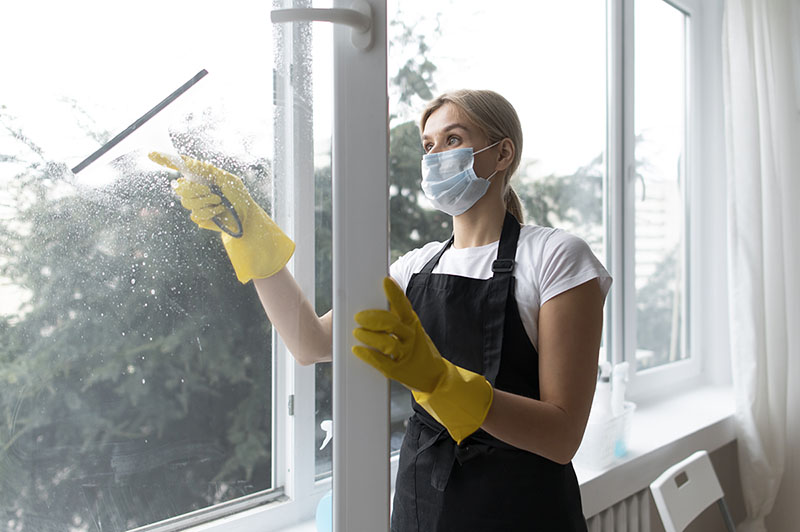
The single best habit is prevention. A quick daily squeegee on the shower glass after your last shower removes the water before its minerals can dry and bond. A weekly wipe-down of faucets and fixtures keeps scale from stacking up. Buildup that's a few days old wipes away in seconds; buildup that's a few months old takes real effort and sometimes never fully comes off. Consistency beats scrubbing every time.
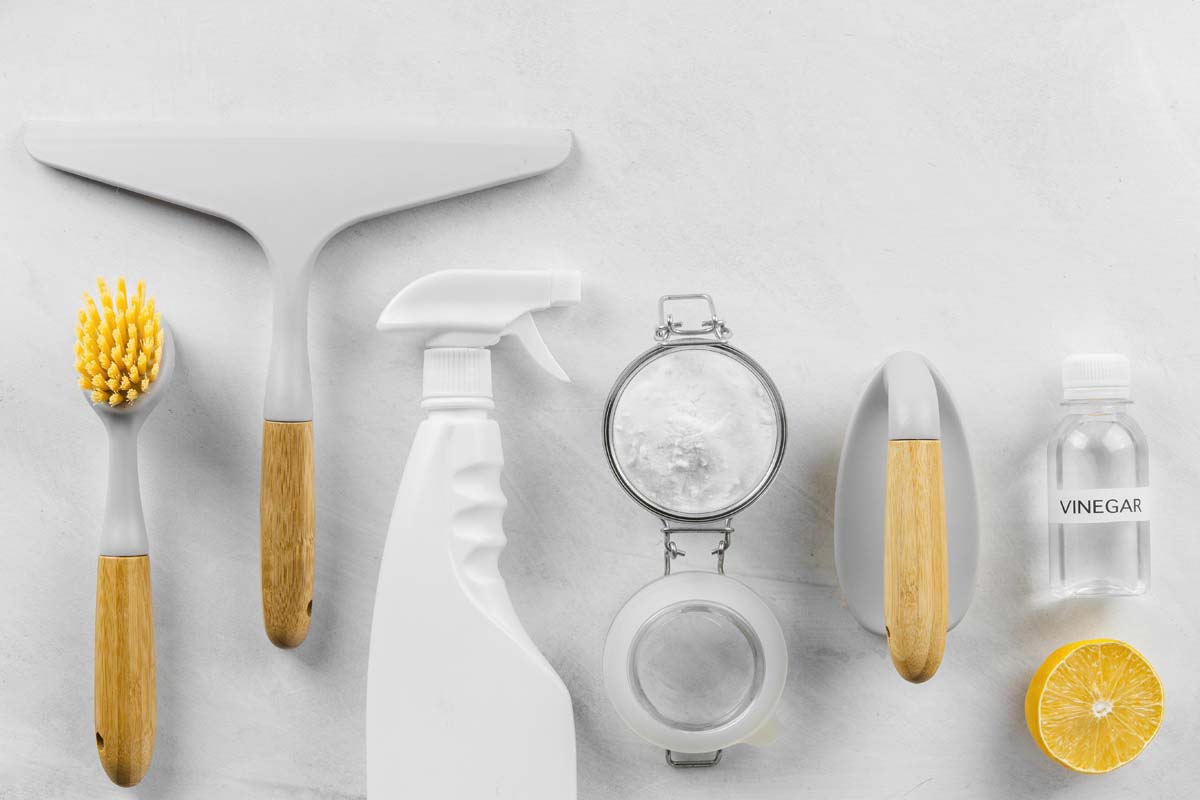
Limescale is alkaline, so a mild acid dissolves it. Your two best options are plain white vinegar and a commercial lime/scale remover (products labeled for calcium, lime, and rust). For glass, faucets, and tile, warm white vinegar on a cloth — or a vinegar-soaked paper towel pressed onto the deposit for 10 to 15 minutes to let it dwell — will break down the minerals so they wipe away instead of requiring you to grind at them.
For a step-by-step walkthrough on the toughest surface of all, see our companion guide on how to remove hard water stains from glass shower doors. If your water flow has dropped to a trickle, the fix is usually scale in the fixture itself — our guide on how to clean a shower head and restore water flow covers the vinegar-soak method. And for dingy tile lines, how to clean grout and make tile look brand new will get them back to bright.
Acidic descalers work beautifully on the right materials and can ruin the wrong ones. In thousands of homes, the damage we see almost always comes from a well-meaning homeowner using the right product in the wrong place. Keep these rules and you'll never have that problem:
One more note for stainless-steel appliances, which pick up their own hard-water spots around sinks and dishwashers: they need a gentler touch than tile or glass. Our guide on how to clean stainless steel appliances shows you how to remove spots without scratching or dulling the finish.
A few targeted tricks handle the everyday annoyances. For cloudy glassware and spotty dishes, add a rinse aid to your dishwasher and make sure you're not overloading it — rinse aid sheets the water off so minerals don't dry in spots. For a scaled-up faucet aerator, unscrew the tip and soak it in warm vinegar for 15 minutes, then brush it clean with an old toothbrush; you'll often get your full water pressure back. For soap scum on tub and tile, a warm vinegar solution followed by a good rinse cuts the sticky film that hard water makes so stubborn. And for the shower glass, once you've done the deep descale, a daily squeegee is genuinely the difference between glass that stays clear for months and glass that clouds over within a week.
Some Chicago-area homeowners install a whole-house water softener, which swaps the calcium and magnesium out before the water ever reaches your taps. It genuinely reduces scale and soap scum and can make cleaning easier. That said, it's an investment with ongoing salt and maintenance costs, and plenty of families do just fine managing Chicago's moderately hard water with good cleaning habits and the occasional vinegar treatment. If limescale is a constant battle in your home, a softener is worth pricing out — but it's not a requirement for a spotless home.
Hard water is one of those quiet, relentless problems — it never stops, and it always comes back. If you're tired of fighting cloudy glass, crusty faucets, and stubborn soap scum, that's exactly the kind of work we love to take off your plate. Spotless Home Cleaners has served Chicago and 70+ surrounding suburbs for 11 years, with a background-checked crew, eco-friendly products, and a 100% satisfaction guarantee backed by our 75-point inspection. We know how to descale safely without harming your stone, your finishes, or your fixtures.
Call us now and book your cleaning today. If it's been a while, a one-time deep cleaning is the fastest way to reset every hard-water surface in your home back to spotless.




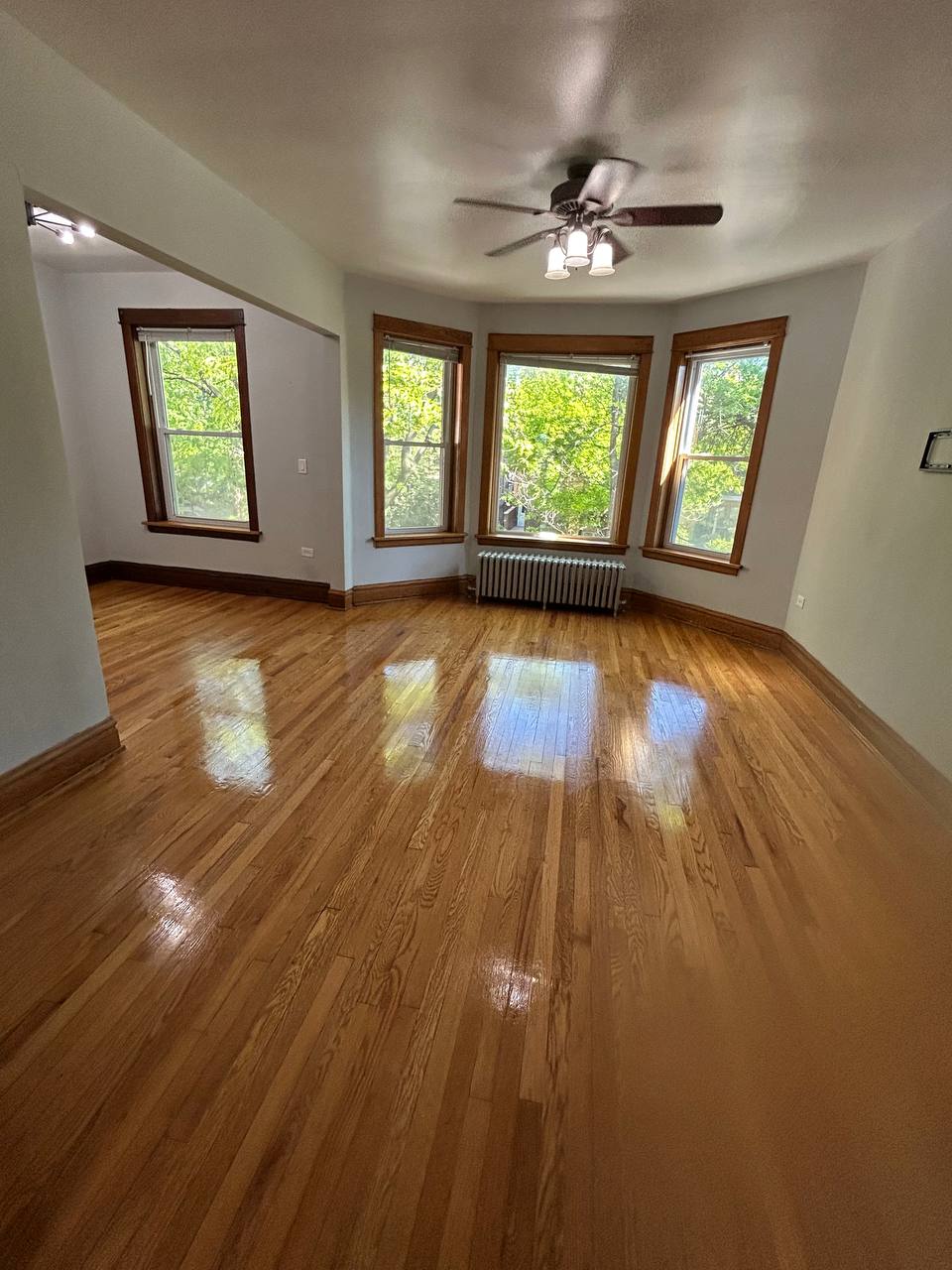
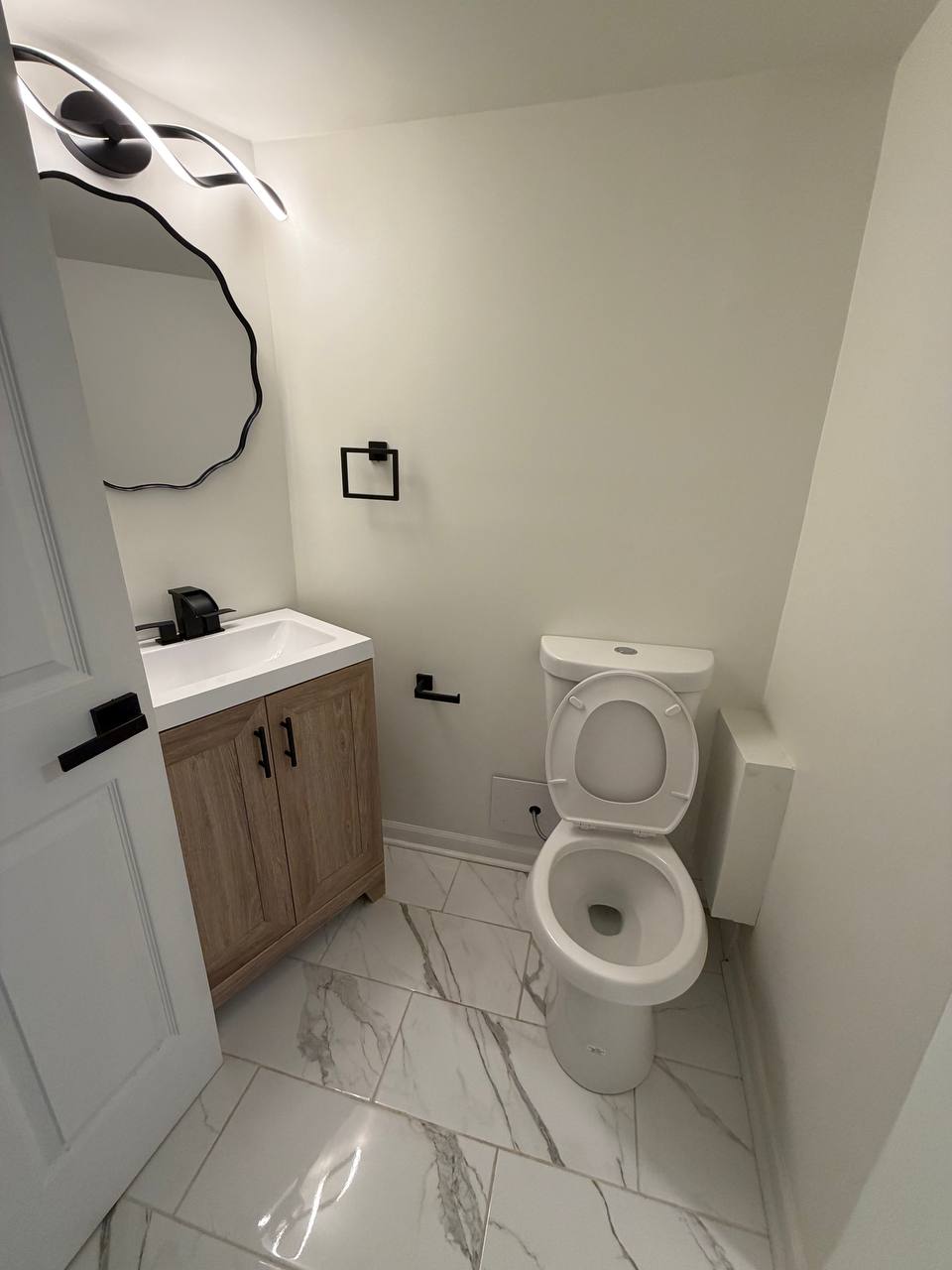

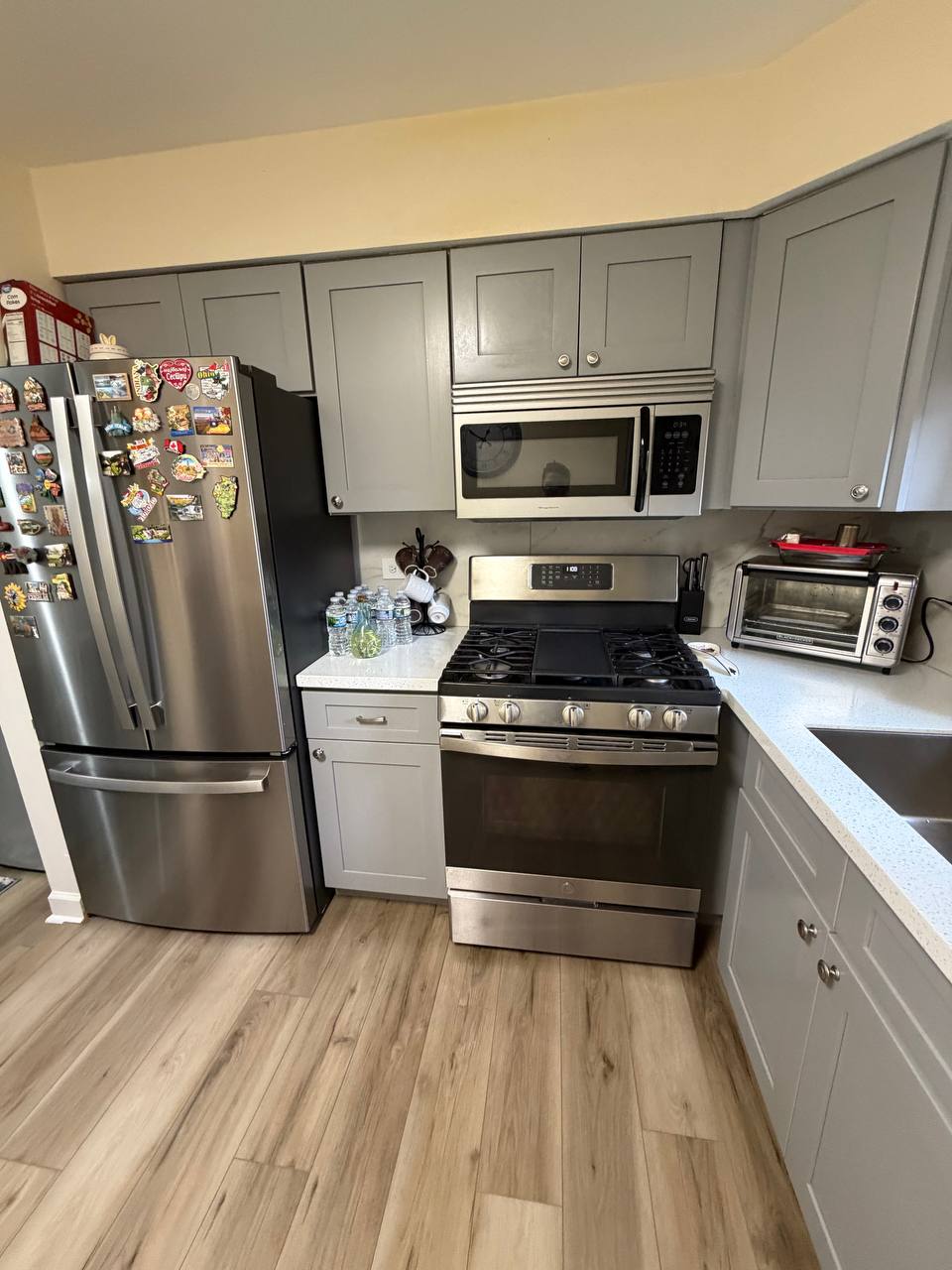
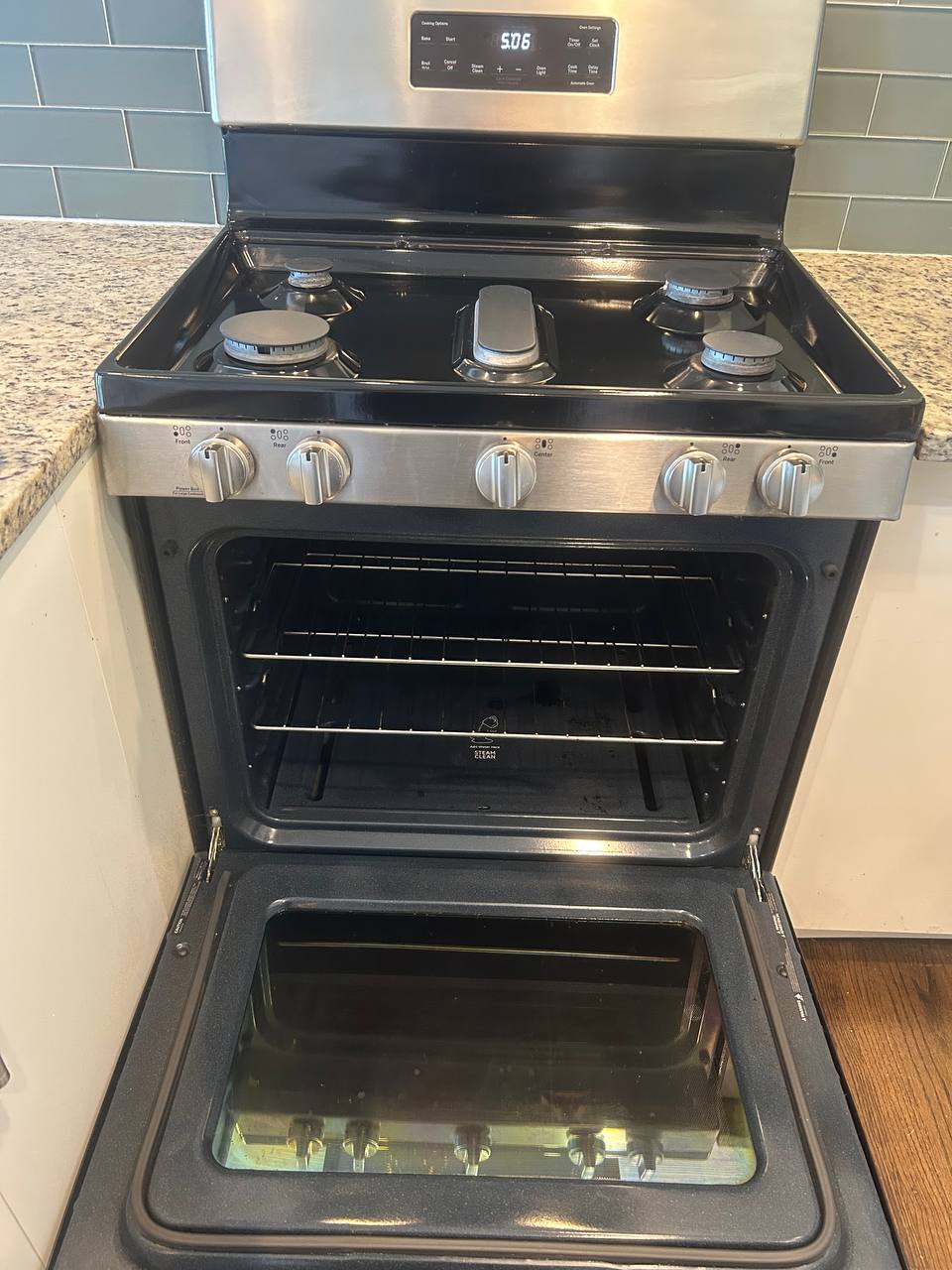
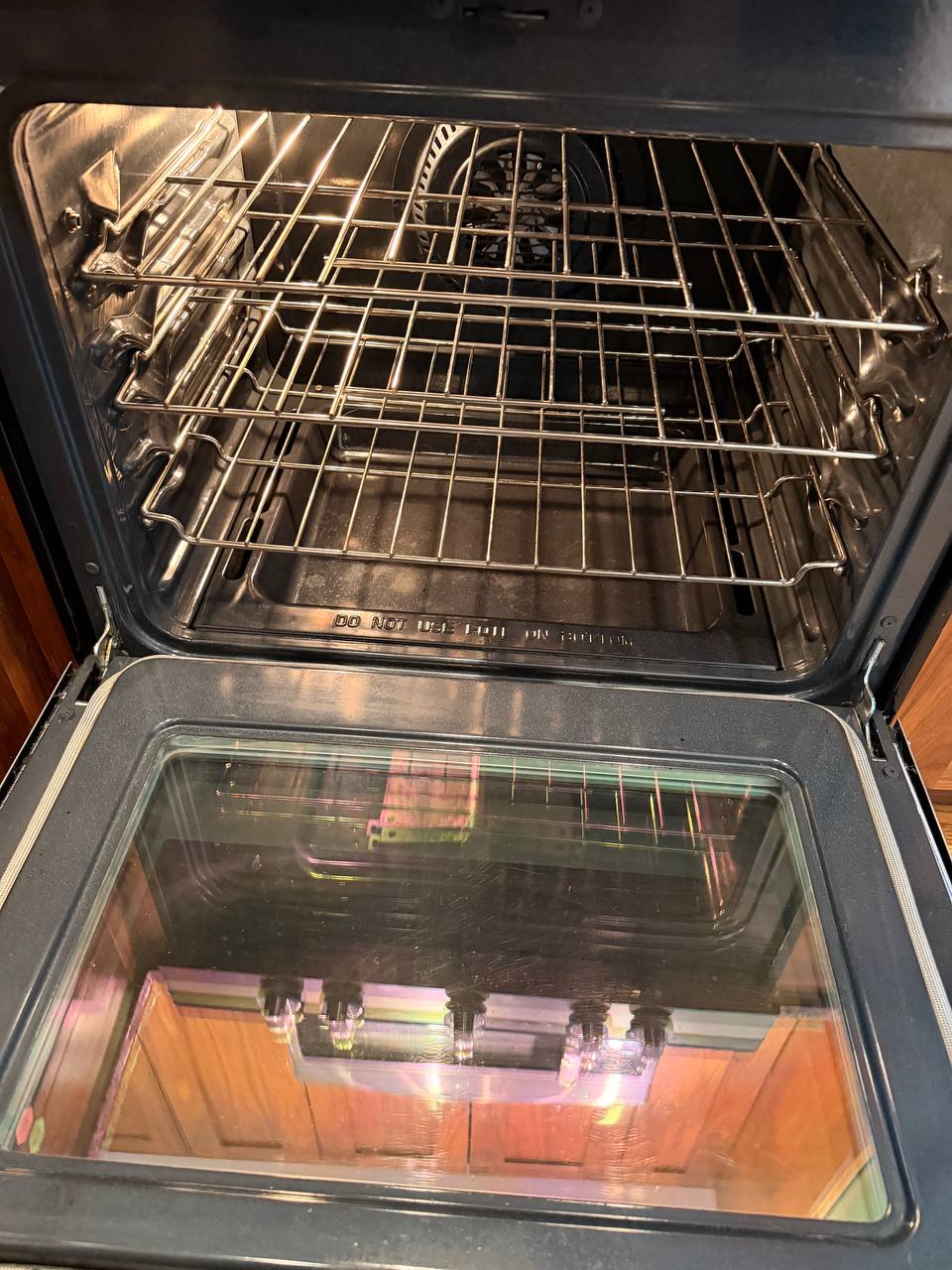
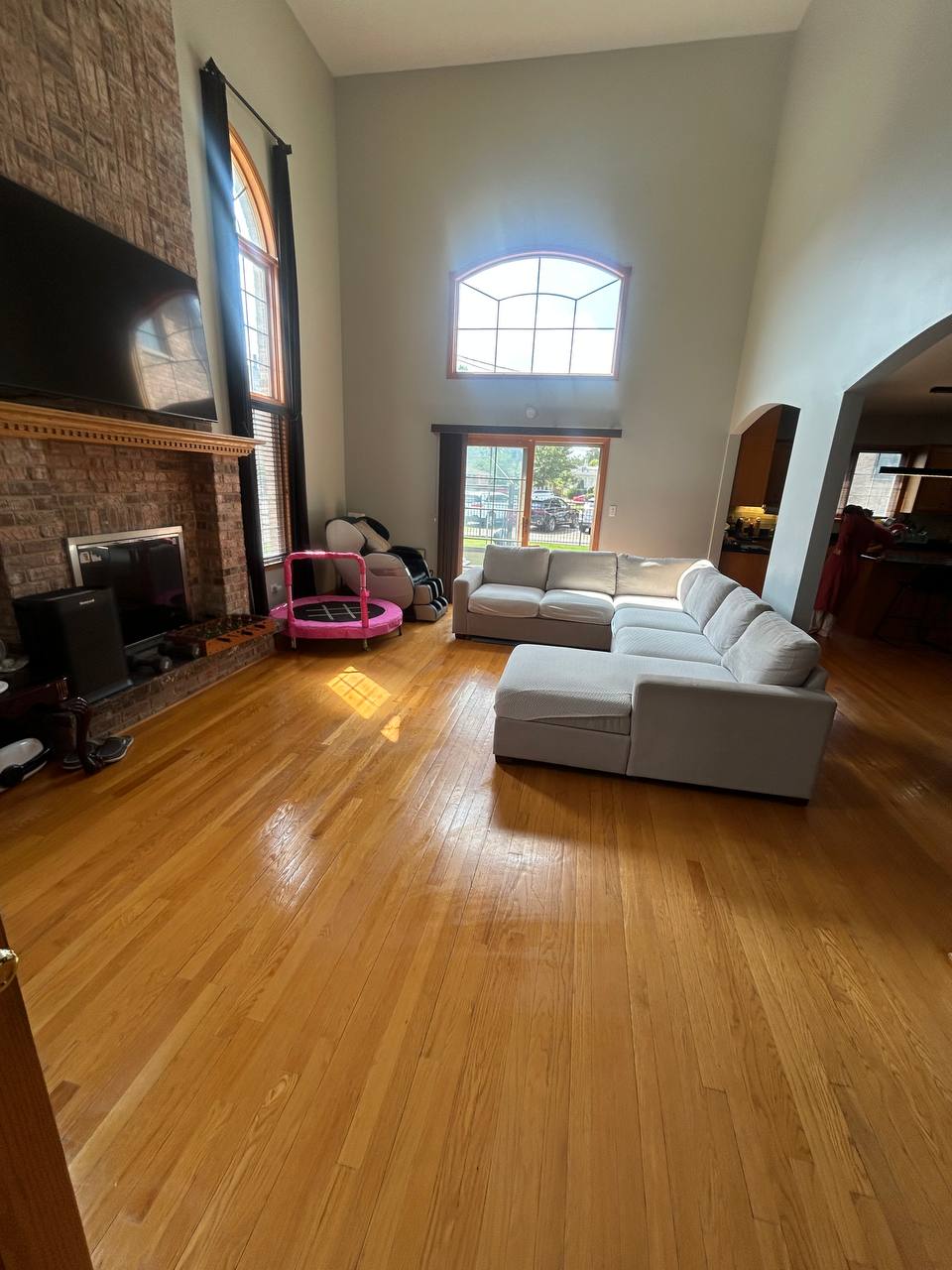

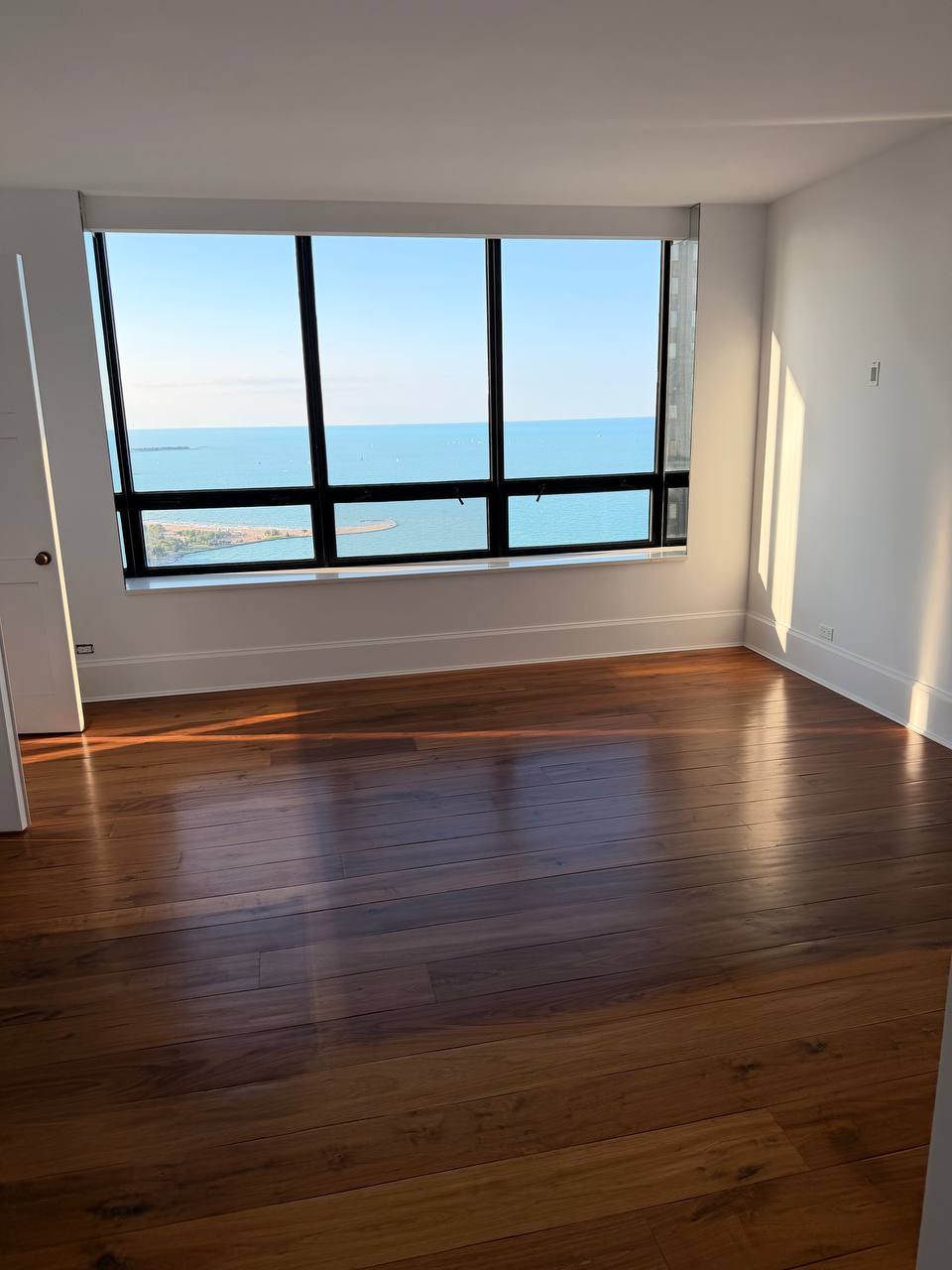









Keep your space fresh, clean, and stress-free with our full range of residential cleaning services in Chicago, IL. Whether you need routine maintenance, a deep clean, or move-in/move-out service, our expert team delivers spotless results every time.